
Introduction
Understanding how to care for an old dog daily is essential for every pet owner. Senior dogs require more attention, patience, and a well-structured routine to maintain their health and happiness. Unlike younger dogs, aging dogs may experience joint pain, slower metabolism, reduced energy levels, and even cognitive decline. This is why building a proper senior dog care routine is not just important—it’s necessary.
When you learn how to care for an old dog daily, you are not only extending your dog’s life but also improving their quality of life. Small changes like adjusting diet, modifying exercise routines, and creating a comfortable environment can make a huge difference. A consistent daily routine helps your dog feel secure and reduces anxiety, especially in older pets.
In this guide, you’ll discover everything you need to know about how to care for an old dog daily, including feeding, exercise, grooming, mental stimulation, and health monitoring. Whether your dog is just entering senior years or already aging, this complete guide will help you provide the best care possible.
1. How to Care for an Old Dog Daily: Proper Nutrition for Senior Dogs
One of the most important aspects of how to care for an old dog daily is providing proper nutrition. As dogs age, their metabolism slows down, and their dietary needs change. Feeding your senior dog the right food can help prevent obesity, support joint health, and boost their immune system.
A well-balanced diet for senior dogs should include high-quality protein, healthy fats, and essential vitamins. You should choose food specifically designed for older dogs because it contains nutrients tailored for aging bodies. Foods rich in omega-3 fatty acids help reduce inflammation and support joint health.
When learning how to care for an old dog daily, portion control is equally important. Overfeeding can lead to weight gain, which puts extra stress on joints. Instead, divide meals into smaller portions throughout the day.
Key nutrition tips:
- Choose senior dog food formulas
- Include joint-support nutrients like glucosamine
- Provide fresh water at all times
- Avoid excessive treats
A healthy diet is the foundation of a strong senior dog care routine and plays a major role in keeping your dog active and happy.
2. How to Care for an Old Dog Daily: Safe and Gentle Exercise Tips
Exercise is still essential when understanding how to care for an old dog daily, but it must be adjusted according to your dog’s age and physical condition. Senior dogs may not have the same energy levels as before, but they still need regular movement to maintain muscle strength and joint flexibility.
Short, gentle walks are ideal for older dogs. Instead of long, intense exercise sessions, focus on consistency. Walking your dog 2–3 times a day for shorter durations helps improve circulation and prevents stiffness.
Low-impact activities are the best option:
- Slow walks
- Light play sessions
- Swimming (if possible)
While learning how to care for an old dog daily, it’s important to watch for signs of fatigue. If your dog starts limping, slowing down excessively, or showing discomfort, it’s time to stop.
Exercise not only supports physical health but also improves mental well-being. A well-balanced senior dog care routine always includes safe and controlled physical activity.
3. How to Care for an Old Dog Daily: Creating a Comfortable Home Environment
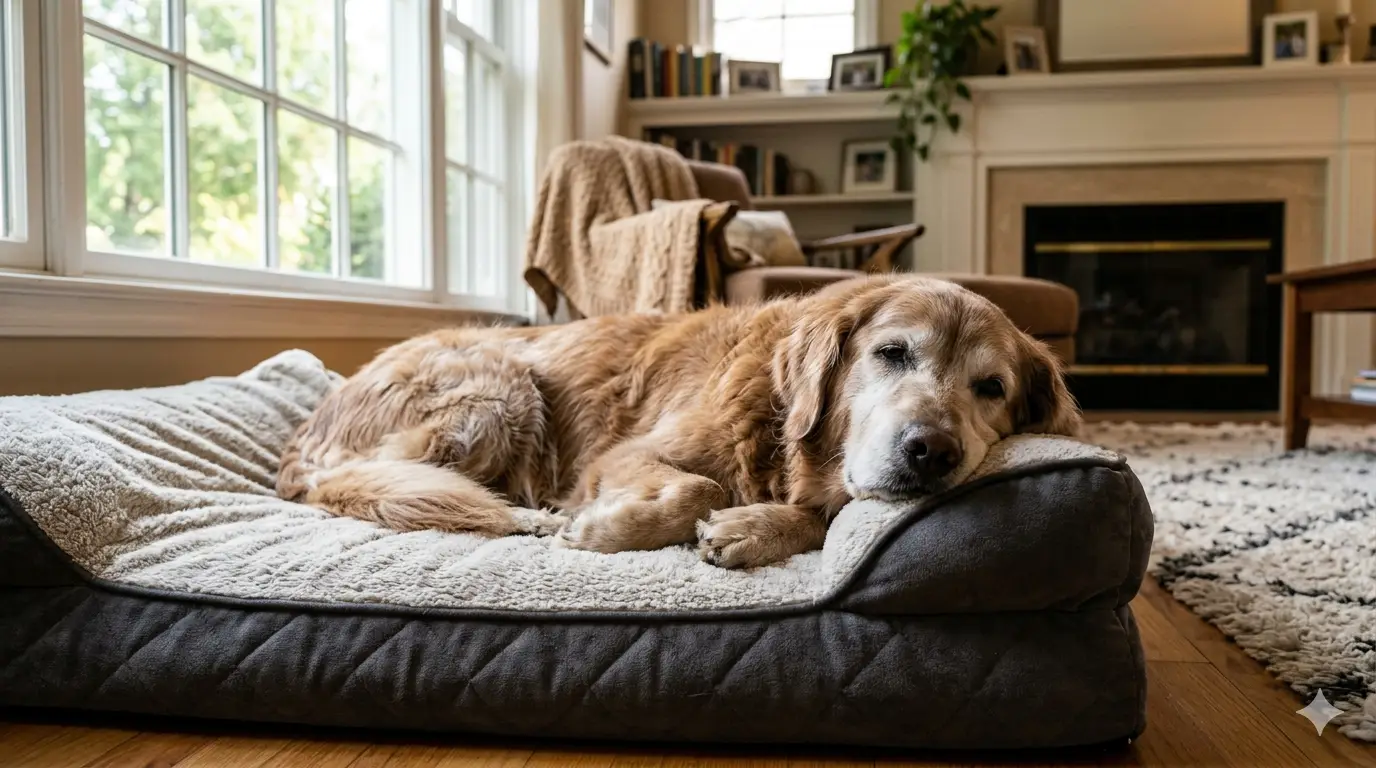
Creating a comfortable living space is a key part of how to care for an old dog daily. As dogs age, they may develop joint pain, arthritis, or mobility issues, making it harder for them to move around the house.
Providing a soft and supportive bed is essential. Orthopedic beds are highly recommended because they reduce pressure on joints and improve sleep quality. Make sure your dog’s sleeping area is warm, quiet, and easily accessible.
You should also make small changes around your home:
- Use non-slip mats to prevent falls
- Add ramps for stairs or furniture
- Keep food and water bowls at an easy height
When focusing on how to care for an old dog daily, comfort plays a major role in reducing stress and improving overall health. A safe and cozy environment allows your dog to relax and move without fear of injury.
4. How to Care for an Old Dog Daily: Grooming and Hygiene Routine
Grooming is another essential part of how to care for an old dog daily. Older dogs may not groom themselves as effectively, which can lead to skin issues, infections, or discomfort.
Regular brushing helps remove loose hair, improve blood circulation, and keep the coat healthy. Bathing should be done when necessary using gentle shampoos designed for sensitive skin.
Important grooming practices include:
- Brushing fur 2–3 times a week
- Cleaning ears regularly
- Trimming nails to prevent pain
- Checking for lumps or skin changes
Dental care is also critical when learning how to care for an old dog daily. Poor oral hygiene can lead to infections and other health issues. Brushing your dog’s teeth or using dental treats can help maintain oral health.
Proper grooming not only keeps your dog clean but also allows you to detect health problems early.
5. 5. How to Care for an Old Dog Daily with Mental Stimulation and Activities
Mental health is just as important as physical health when it comes to how to care for an old dog daily. Senior dogs can experience cognitive decline, similar to dementia in humans, which may cause confusion or anxiety.
Keeping your dog mentally stimulated helps slow down cognitive aging. Simple activities can make a big difference:
- Puzzle toys
- Gentle training sessions
- Interactive games
Spending quality time with your dog is one of the best ways to support their mental well-being. Talking to them, petting them, and maintaining a routine can reduce stress and anxiety.
When you focus on how to care for an old dog daily, remember that mental engagement keeps your dog happy and emotionally secure.
6. How to Care for an Old Dog Daily with Regular Health Monitoring
Health monitoring is a crucial part of how to care for an old dog daily. As dogs age, they become more prone to health issues such as arthritis, heart disease, and diabetes.
Regular vet checkups are essential for early detection of problems. You should also monitor your dog at home for any changes in behavior or physical condition.
Watch for signs like:
- Loss of appetite
- Weight changes
- Difficulty walking
- Increased sleeping
When learning how to care for an old dog daily, prevention is always better than cure. Keeping track of your dog’s health ensures that any issues are addressed quickly.
7. How to Care for an Old Dog Daily with Love, Routine, and Attention
Finally, the most important part of how to care for an old dog daily is giving them love and attention. Senior dogs may become more dependent on their owners, and emotional support plays a big role in their well-being.
Spending time with your dog strengthens your bond and helps them feel safe. Even simple actions like sitting beside them or talking to them can provide comfort.
Key ways to show care:
- Maintain a consistent routine
- Offer gentle affection
- Avoid sudden changes in environment
A loving environment is the heart of a successful senior dog care routine.
FAQ Section
1. How often should I feed my senior dog?
You should feed your senior dog 2–3 small meals daily to support digestion and maintain energy levels.
2. How much exercise does an old dog need?
Old dogs need light exercise such as short walks for about 20–30 minutes daily, depending on their health.
3. What are signs of aging in dogs?
Common signs include reduced energy, joint stiffness, weight changes, and slower movement.
4. Can old dogs learn new things?
Yes, senior dogs can still learn with patience and gentle training methods.
5. How can I make my old dog comfortable?
Provide a soft bed, maintain a routine, and ensure easy access to food and water.
6. What is the best routine for a senior dog?
A consistent routine that includes proper feeding, light exercise, grooming, and regular health checks is ideal for senior dogs.
Conclusion
Understanding how to care for an old dog daily is one of the most rewarding responsibilities for any pet owner. As your dog ages, their needs evolve, requiring more attention, patience, and thoughtful care. By focusing on proper nutrition, gentle exercise, regular grooming, mental stimulation, and health monitoring, you can significantly improve your dog’s quality of life.
A well-planned senior dog care routine ensures that your dog remains comfortable, active, and emotionally secure. Small daily efforts can lead to big improvements in your dog’s overall health and happiness. Remember, your dog has spent years giving you unconditional love, and now it’s your turn to give back.
By following the tips in this guide on how to care for an old dog daily, you can help your furry friend enjoy their golden years with comfort and joy. Always stay observant, be gentle, and most importantly, continue to show love and care every single day