
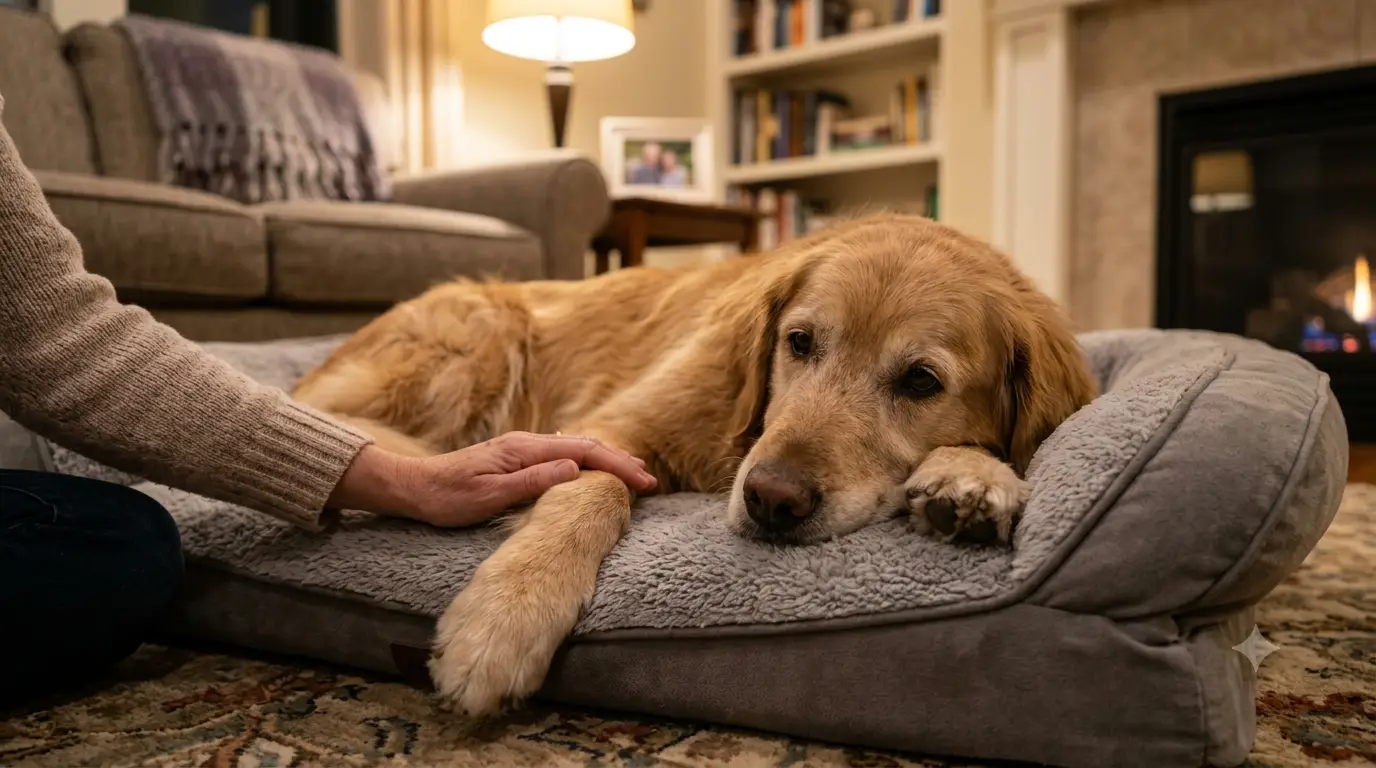
Your senior dog starts limping…
But here’s the strange part — they’re not crying.
No whining.
No obvious pain.
Just… limping.
⚠️ Warning: Waiting too long can make this condition permanent.
👉 Most dog owners ignore this moment.
And that’s where things quietly get worse.
Because sometimes… silence doesn’t mean safety.
⚡ Quick Answer
If your senior dog is limping suddenly but not crying, it could be due to:
- Early-stage arthritis
- Minor soft tissue injury
- Joint stiffness
- Hidden pain (dogs often hide discomfort)
- Nerve-related issues
👉 Even without crying, limping is always a warning sign.
📖 A Real-Life Situation Most Owners Miss
Last year, a dog owner noticed something small.
Their 10-year-old Labrador started limping after naps.
But the dog was still:
✔ Eating normally
✔ Wagging tail
✔ Playing (a little)
So they thought…
👉 “It’s probably nothing.”
That assumption cost them.
Within weeks, the limp got worse.
The diagnosis?
👉 Advanced arthritis.
Here’s the truth:
👉 Dogs don’t always show pain the way humans do.
Sometimes, limping without crying is actually
the early stage of a bigger problem.
🚨 Most Dog Owners Don’t Realize This
Dogs are naturally wired to hide pain.
Why?
Because in the wild, showing weakness = danger.
👉 So your dog might be hurting…
…and still act completely normal.
🐾 Why Is My Senior Dog Limping Suddenly But Not Crying?
Here are the most common hidden causes:
1. Early Arthritis
Stiff joints, especially after rest.
👉 This is the #1 hidden cause in senior dogs.
2. Minor Muscle Strain
Small injuries from jumping or slipping.
👉 No crying, but visible limp.
3. Joint Inflammation
Swelling inside joints causing discomfort.
4. Ligament Issues
Early-stage tears may not cause severe pain immediately.
5. Nerve Problems
Sometimes it’s not pain — it’s signal disruption.
6. Paw Injury
Cuts, thorns, or irritation.
👉 This mistake can make things worse:
Not checking the paw properly.
7. Bone or Hip Issues
Early hip degeneration or joint disease.
❗ When Should You Worry About Limping in Senior Dogs?
Pay attention if you notice:
- Limping after rest
- Slower movement
- Difficulty climbing stairs
- Sleeping more than usual
- Less excitement for walks
👉 If you see 2 or more signs, take it seriously.
❌ This Mistake Can Make Things Worse
👉 Ignoring the limp because “the dog isn’t crying.”
This delay can lead to:
- Chronic pain
- Mobility loss
- Expensive treatments
✅ How to Treat a Limping Senior Dog at Home
Start with simple steps:
✔ Limit activity for 24–48 hours
✔ Check paws and legs carefully
✔ Observe walking pattern
✔ Provide soft bedding
✔ Keep your dog warm
👉 If limp lasts more than 2–3 days → visit a vet
🧠 When Limping Without Pain Becomes Dangerous
Here’s something important…
👉 Not all limping starts with pain — but it can end in it.
What seems mild today can turn into:
- Arthritis
- Joint damage
- Permanent mobility issues
And it happens slowly… without obvious warning.
🐕 Breeds More Prone to Joint Issues
Some dogs are at higher risk:
- Labrador Retriever
- German Shepherd
- Golden Retriever
- Rottweiler
👉 If your dog is one of these, be extra cautious.
💡 Simple Home Care Tips That Actually Help
✔ Use a warm resting area
✔ Give gentle massages
✔ Keep exercise controlled (short walks)
✔ Maintain healthy weight
✔ Consider joint supplements (vet advice)
⚡ Quick Checklist
If your dog is limping but not crying:
✔ Check paw
✔ Limit movement
✔ Observe for 48 hours
✔ Watch behavior changes
✔ Visit vet if no improvement
🚨 Final Warning
👉 Silence is not safety.
Just because your dog isn’t crying…
does NOT mean they aren’t hurting.
🏁 Conclusion
A senior dog limping suddenly but not crying is not normal.
It’s subtle.
It’s quiet.
But it matters.
👉 Catching it early can save your dog from long-term pain.
❓ Frequently Asked Questions
Q1: Why is my senior dog limping suddenly but acting normal?
Dogs often hide pain. Limping can be an early sign of arthritis or injury even if your dog seems fine.
Q2: Can a dog limp without pain?
Yes, especially in early stages. But it still indicates a problem.
Q3: How long should I wait if my dog is limping?
If it lasts more than 2–3 days, consult a vet.
Q4: What is the most common cause of limping in senior dogs?
Arthritis is the most common cause, especially after rest.
1 thought on “Senior Dog Limping Suddenly”