
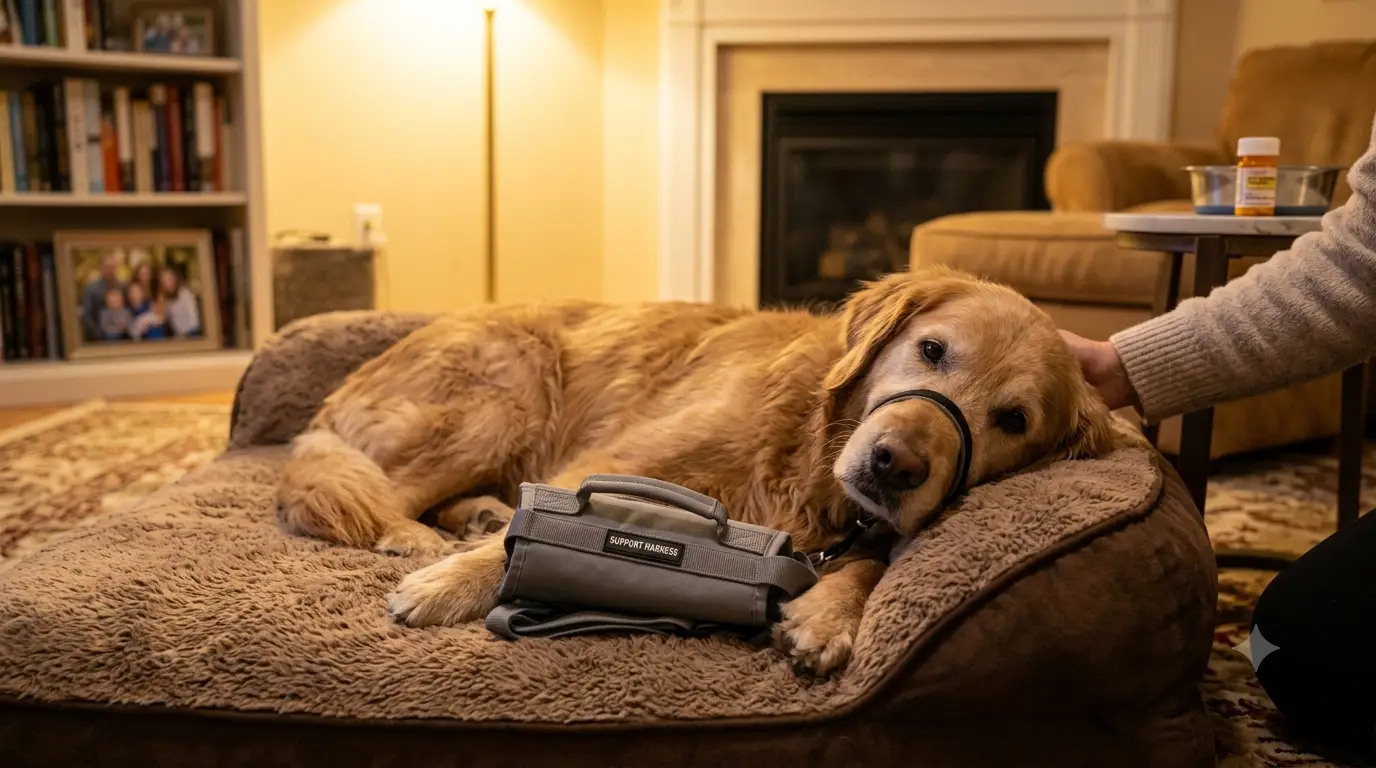
Why Does Your Senior Dog Need to Pee at Night?
Create a senior dog nighttime potty routine to reduce accidents, manage nighttime peeing, and help your older dog sleep more comfortably
1. Age-related changes in bladder control
Some older dogs have more difficulty holding urine for long periods. Their bladder control may weaken, or they may need to urinate more often.
This can lead to senior dog nighttime potty accidents, even in dogs that have been house-trained for years.
2. Medical conditions
Frequent urination or accidents can sometimes be signs of a health problem, including:
- Urinary tract infections (UTIs)
- Diabetes
- Kidney disease
- Bladder stones or other urinary problems
- Urinary incontinence
These conditions need different treatments. If your dog suddenly starts peeing inside at night, arrange a veterinary check rather than assuming it is simply old age.
3. Reduced mobility and joint pain
Older dogs with arthritis or other mobility problems may struggle to get out of bed, walk down stairs, or reach the door in time.
Your dog may know they need to go outside but be unable to get there comfortably. A shorter, safer route to the yard may help.
4. Changes in sleep and behavior
Some senior dogs develop cognitive changes similar to dementia in humans. They may become confused, wander around at night, wake up frequently, or forget familiar routines.
Senior dog dementia, nighttime pacing, and peeing may occur together, but these signs can also have other causes. A veterinarian can help determine what is happening.
5. Medication or changes in water intake
Certain medicines, including some commonly prescribed steroids and diuretics, can increase thirst or urination. Health conditions can also make a dog drink more water than usual.
Never restrict your dog’s water to prevent nighttime accidents. Ask your veterinarian whether medication timing or another part of the care plan should be adjusted.
How to Create a Senior Dog Nighttime Potty Routine
A consistent schedule can help your dog feel more secure and give you a better idea of when they need to go outside. Every dog is different, so adjust the timing to your dog’s health, habits, and veterinarian’s advice.
Here is a simple nighttime routine you can start with.
Step 1: Schedule a bathroom break after dinner
Take your dog outside after their evening meal. This gives them an opportunity to urinate and have a bowel movement before bedtime.
Some dogs need another trip later in the evening, so watch your dog’s usual habits rather than relying on one fixed time.
Step 2: Take a short walk before bed
Plan a calm potty walk about 15–30 minutes before bedtime, adjusting the timing to your dog’s needs.
Keep the walk short if your dog has arthritis or gets tired easily. Give them enough time to sniff and find a comfortable spot to urinate.
If your dog has trouble walking, consider using a leash and choosing a nearby, level area. A short trip to the yard may be enough.
Step 3: Give your dog enough time to pee
Do not rush your dog back inside after a few seconds. Older dogs may take longer to stand, walk, sniff, and find a suitable spot.
If your dog does not urinate, return indoors and try again shortly afterward if their behavior suggests they still need to go.
Step 4: Make the final trip predictable
Use the same door and, if possible, the same outdoor potty area each night. A simple verbal cue, such as “Go potty,” may help your dog understand what you expect.
Offer gentle praise when your dog finishes. Avoid punishment if an accident happens later.
Step 5: Make nighttime bathroom trips easy
If your dog wakes up during the night, take them outside calmly. Keep lights low, avoid exciting games, and return to bed afterward.
For dogs that struggle with stairs or slippery floors, add nonslip runners and a night-light along the route to the door.
Sample Senior Dog Potty Schedule
The following schedule is a starting point, not a rule that every older dog should follow.
| Time | What to do |
|---|---|
| 6:00 PM | Dinner, according to the usual feeding plan |
| 6:30–7:00 PM | Outdoor bathroom break |
| 8:30 PM | Another potty opportunity if needed |
| 9:30–10:00 PM | Final calm potty trip before bed |
| Overnight | Take your dog out if they wake or need help |
| 6:00–7:00 AM | Morning bathroom break |
Important: If your dog needs to urinate more often than this schedule allows, provide extra bathroom breaks. Do not force your dog to wait until the next scheduled time.
For dogs with diagnosed incontinence, a routine may reduce mess, but it will not necessarily stop urine leakage during sleep. The underlying cause may need treatment.

American Kennel Club
+1
How to Stop a Senior Dog Waking Up to Pee
If your dog wakes you up every night to urinate, first work out whether they are producing a normal amount of urine more frequently or leaking urine without realizing it.
These are different problems and may need different solutions.
Keep a nighttime potty diary
For three to seven days, write down:
- When your dog drinks water.
- When your dog urinates and approximately how much.
- Whether they wake you up or leak urine while sleeping.
- Whether accidents happen shortly after a potty trip.
- Any changes in appetite, energy, medication, or behavior.
Share these notes with your veterinarian. They can help identify patterns and decide whether urine testing or bloodwork is needed.
American Kennel Club
+1
Do not limit water to prevent accidents
It may seem reasonable to remove the water bowl before bedtime, but this can be dangerous if your dog is thirsty because of a medical condition.
Keep fresh water available unless your veterinarian gives you a specific medical plan. If your dog drinks much more than usual, mention it to your vet.
Ask about medication timing
Some medications increase urination or thirst. If your dog takes a medicine that might affect bathroom habits, ask your veterinarian whether its timing or dosage needs review.
Never skip, reduce, or move a prescribed dose without veterinary guidance.
Consider an extra overnight potty break
If your dog is healthy but cannot comfortably hold their urine all night, a planned overnight break may help. Start by taking them out before the time accidents usually occur.
For example, if your dog regularly wakes up at 2:00 AM, you could try a calm bathroom trip slightly earlier and adjust the timing based on what happens.
If the problem is new, worsening, or accompanied by increased thirst, pain, or other symptoms, arrange a veterinary examination rather than relying on scheduling alone.
How to Manage Senior Dog Nighttime Incontinence
Urinary incontinence means urine leaks involuntarily. You may notice a wet patch where your dog sleeps, small drips while walking, or damp fur around their private area.
A dog with incontinence may not realize that urine is leaking. It is not a training failure or bad behavior.
American Kennel Club
Here are practical ways to manage it.
1. Use washable, waterproof bedding
Place a waterproof mattress protector or washable waterproof pad under your dog’s regular bedding.
Choose a soft, absorbent surface that does not slide around. Keep spare bedding nearby so you can change it quickly after an accident.
2. Keep your dog clean and dry
Urine left against the skin can cause irritation and discomfort.
If your dog gets wet, gently clean the affected area with a pet-safe product recommended by your veterinarian, then dry it thoroughly. Check the skin regularly for redness, sores, or an unusual smell.
3. Ask your vet about treatment
Treatment depends on the cause. Some dogs benefit from prescription medication, while others need treatment for an infection or an underlying disease.
Your veterinarian may recommend a physical examination, urine testing, bloodwork, or additional tests. Do not give human medicines or unverified supplements to treat incontinence.
4. Use diapers or belly bands when appropriate
Overnight diapers and belly bands can help protect bedding, but they should not replace diagnosis or regular bathroom opportunities.
Choose a product that fits comfortably and check it frequently. Remove wet products promptly, clean the skin, and allow the area to dry.
Dog Diapers for Senior Dogs Overnight: Are They a Good Idea?
Dog diapers can be helpful for some older dogs, especially those that leak urine while sleeping or cannot reach the door in time.

Disposable dog diapers
Convenient for travel or occasional overnight use. Choose the correct size and change the diaper whenever it becomes wet or soiled.

Washable dog diapers
Reusable and potentially economical over time. They need thorough washing and complete drying between uses.

Belly bands for male senior dogs
Wrap around the waist to absorb urine. They are designed for urine leakage, not bowel movements, and must be changed regularly.
How to choose the right overnight protection
Look for these features:
- A comfortable fit that does not rub the skin.
- Absorbent material suited to your dog’s amount of leakage.
- A secure closure that is easy to adjust.
- Materials that are easy to clean or replace.
- Enough room for your dog to move, lie down, and stand comfortably.
Never leave a wet diaper or belly band on your dog all night without checking it. Prolonged moisture can irritate the skin. If your dog develops redness, sores, or discomfort, stop using the product until you have discussed the problem with your veterinarian.
If your dog repeatedly wets the diaper heavily, ask your vet whether more frequent potty trips or a different management plan would be safer.
What If Your Senior Dog Has Dementia and Pees at Night?
Some older dogs experience canine cognitive dysfunction, a condition that can affect memory, awareness, and sleep patterns.
You may notice your dog pacing around the house, staring at walls, wandering into unfamiliar rooms, or appearing confused after dark. They may also forget where the door is or have accidents despite years of reliable house-training.
American Kennel Club
+1
Try these supportive changes:
- Keep a consistent bedtime: Follow the same gentle routine each evening.
- Add night-lights: Help your dog find their bed and the route to the door.
- Create a safe sleeping area: Use nonslip flooring and remove obstacles.
- Offer calm reassurance: Speak gently and guide your dog without scolding.
- Ask your vet for help: Discuss nighttime pacing, confusion, and accidents together.
Do not assume that nighttime confusion means dementia. Pain, urinary problems, vision changes, and other medical conditions can cause similar behavior.
When Should You Call a Veterinarian?
A new nighttime potty problem deserves attention, particularly when your dog has been reliably house-trained for years.
Contact your veterinarian promptly if you notice:
- Sudden or repeated accidents indoors.
- Increased thirst or unusually large amounts of urine.
- Frequent urination in small amounts.
- Blood in the urine.
- Whining, discomfort, or difficulty urinating.
- Urine leakage during sleep or irritated skin around the genital area.
Seek emergency veterinary care if your dog repeatedly strains but cannot pass urine, or produces little to no urine while trying. A urinary blockage can be life-threatening. Vomiting, severe weakness, or marked lethargy alongside urinary problems also warrants urgent assessment.
American Kennel Club
+1
Your veterinarian may recommend a urine sample, blood tests, a physical examination, or imaging to identify the cause. Early diagnosis can help you choose the right treatment and avoid unnecessary discomfort for your dog.
Frequently Asked Questions
1. Why does my old dog pee in the house at night?
Common causes include urinary incontinence, urinary tract infections, kidney disease, diabetes, arthritis, and cognitive changes. A sudden change should not automatically be blamed on old age. A veterinary examination can help identify the cause.
2. How often should a senior dog go potty at night?
There is no single schedule that works for every dog. Some older dogs can sleep through the night, while others need an extra bathroom break. Follow your dog’s individual needs and veterinary advice rather than forcing them to hold their urine.
3. How can I stop my senior dog waking up to pee?
Start with a consistent bedtime potty trip, make the route outdoors easy to navigate, and keep a diary of nighttime urination. If the waking is new or frequent, have your dog checked for medical causes before assuming that a routine change will solve it.
4. Should I use dog diapers for my senior dog overnight?
Diapers can help manage leakage and protect bedding. Choose a comfortable fit, check the diaper regularly, and change it promptly when wet or soiled. Diapers manage the mess but do not treat the underlying cause of incontinence.
5. Should I take away my dog’s water before bedtime?
No, not unless your veterinarian specifically recommends a medically appropriate restriction. Removing water can cause dehydration and may be particularly unsafe for dogs with conditions that increase thirst. Discuss excessive drinking with your veterinarian.
Key Takeaways
- Build a consistent senior dog nighttime potty routine with a final bathroom trip before bed.
- Give your dog extra potty breaks when needed instead of forcing them to wait.
- Never restrict water without veterinary guidance.
- Use waterproof bedding, washable pads, diapers, or belly bands to manage leakage safely.
- Keep your dog clean and dry to reduce the risk of skin irritation.
- Treat sudden nighttime accidents as a possible health warning, not disobedience.
- Seek urgent veterinary care if your dog cannot pass urine.
Conclusion: Help Your Senior Dog Sleep More Comfortably
Caring for an older dog often means adjusting routines as their needs change. A thoughtful senior dog nighttime potty routine can make bedtime calmer, reduce mess, and help your dog feel safe and comfortable.
Start with a predictable evening schedule, make bathroom trips easier, and use overnight protection when appropriate. Most importantly, remember that repeated nighttime accidents may signal a medical problem that needs attention.
Your senior dog has spent years giving you companionship and love. A little extra patience can make their later years more comfortable.
Now we’d love to hear from you: Does your senior dog wake up several times at night to pee, or do they leak urine while sleeping? Share your experience in the comments. Your story may help another dog owner find a solution.
Recommended sources for further reading
- American Kennel Club: Why Senior Dogs Have House-Training Accidents American Kennel Club
- American Kennel Club: Signs of Urinary Incontinence in Dogs American Kennel Club
- American Kennel Club: Urinary Frequency in Dogs American Kennel Club
Editorial note for SeniorDogHub.com: This article provides general educational information and is not a substitute for veterinary diagnosis or treatment.